


 Goto chatroom
 Όρους
Όρους
 Ιδιωτικότητα
ICD-10 vs CPT vs HCPCS: Understanding the Core Differences in Medical Coding
Introduction
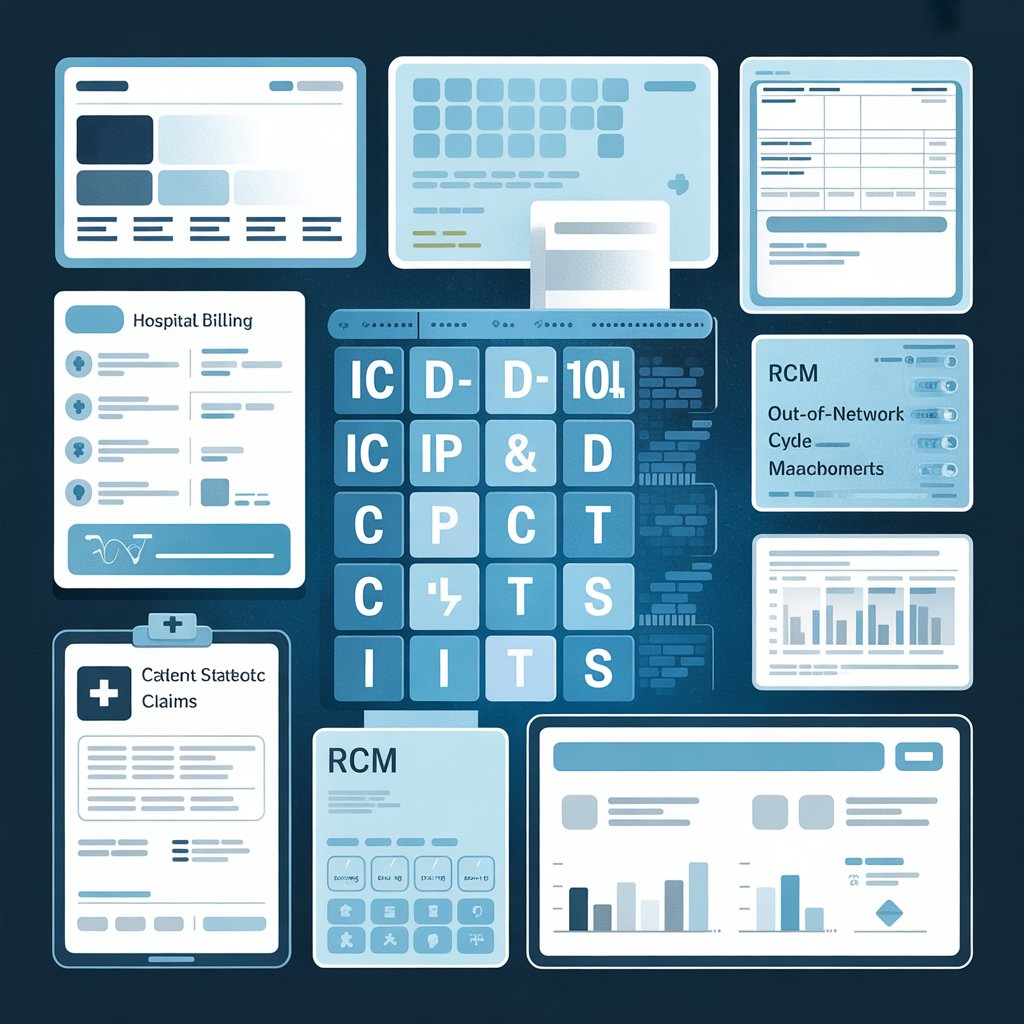
For growing healthcare practices, medical coding for out-of-network billing is more than an administrative task—it is a strategic tool that directly impacts revenue, compliance, and operational efficiency. Understanding the distinctions between ICD-10, CPT, and HCPCS codes is essential for accurate billing, particularly when handling out-of-network claims. ICD-10 codes capture diagnoses, CPT codes document procedures, and HCPCS codes account for additional supplies and services, each playing a unique role in the revenue cycle.
Coding errors are a major contributor to financial inefficiency. Studies indicate that up to 25% of medical claims are denied initially due to coding mistakes, and out-of-network claims face even higher denial rates, often 40% or more. These delays increase accounts receivable days, reduce cash flow, and can cost practices hundreds of thousands of dollars annually, particularly small and mid-sized organizations.
Patients receiving out-of-network care may be billed two to three times higher than in-network services, increasing the risk of delayed payments and bad debt. Compliance is also crucial: improper coding can trigger audits, regulatory penalties, and violations of laws like the No Surprises Act.
This blog explores the differences between ICD-10, CPT, and HCPCS codes, demonstrating how mastering these coding systems supports smarter out-of-network billing. With accurate coding, practices can reduce denials, improve cash flow, and leverage RCM as a growth engine.
Understanding Medical Coding Systems
Accurate coding translates clinical care into standardized codes that ensure proper reimbursement, compliance, and reporting. Each system serves a distinct purpose:
ICD-10 Codes – Diagnoses
The International Classification of Diseases, 10th Revision (ICD-10) captures patient diagnoses and symptoms.
-
Over 70,000 codes for diverse conditions
-
Required for insurance claims and public health reporting
-
Errors in ICD-10 coding are a leading cause of out-of-network claim denials
CPT Codes – Procedures
Current Procedural Terminology (CPT) codes describe medical, surgical, and diagnostic procedures.
-
Maintained by the AMA
-
Over 10,000 procedure codes
-
Accurate CPT coding ensures correct reimbursement, reducing claim rejections
HCPCS Codes – Supplies and Non-Standard Services
The Healthcare Common Procedure Coding System (HCPCS) covers supplies, durable medical equipment, and certain non-physician services.
-
Divided into Level I (CPT) and Level II codes
-
Critical for Medicare/Medicaid claims
-
Errors in HCPCS codes for high-cost equipment or medications can lead to denied claims
Why Accurate Coding Matters in Out-of-Network Billing
Out-of-network billing presents unique challenges that make medical coding accuracy critical:
-
Higher Denial Rates: Out-of-network claims are denied up to 40% more frequently.
-
Extended A/R Days: Out-of-network claims may stay in accounts receivable 60–90 days, compared to 30–45 days in-network.
-
Revenue Leakage: Coding errors in ICD-10, CPT, or HCPCS can lead to lost revenue.
-
Patient Payment Challenges: Patients face higher bills, increasing delayed payments and bad debt risk.
Common Coding Errors and Financial Impact
ICD-10 Errors
-
Upcoding or downcoding can trigger denials
-
Incomplete codes result in claim rejection
-
Wrong diagnosis codes delay reimbursement
CPT Errors
-
Incorrect procedure codes lead to underpayment
-
Bundling errors cause claim disputes
-
Missing or wrong modifiers increase denials
HCPCS Errors
-
Incorrect supply codes result in rejected claims
-
Using outdated codes delays payment
-
Misclassified Medicare/Medicaid claims cause underpayment
Industry research estimates that coding errors contribute to over $3 billion in denied claims annually, emphasizing the financial importance of coding accuracy.
RCM Strategies to Improve Out-of-Network Billing
Proactive Eligibility and Benefit Verification
-
Identify out-of-network risk before services are provided
-
Reduce surprise billing and patient disputes
Coding Accuracy and Staff Training
-
Apply ICD-10, CPT, and HCPCS codes correctly
-
Provide ongoing education to reduce denials
Denial Management
-
Track denial reasons and implement data-driven appeals
-
Automate workflows to recover underpaid claims quickly
RCM Technology
-
Analytics identify coding trends and payer-specific underpayments
-
Automation reduces manual errors and increases staff efficiency
Compliance Considerations
The No Surprises Act has heightened regulatory requirements for out-of-network billing:
-
Prohibits balance billing for emergency services
-
Requires good-faith cost estimates
-
Enforces independent dispute resolution
Accurate coding ensures compliance, reduces audit risk, and minimizes financial penalties.
Best Practices for Smarter Out-of-Network Billing
-
Regular Coding Audits – Identify ICD-10, CPT, and HCPCS errors
-
Staff Training Programs – Stay updated on coding changes and payer rules
-
Technology Integration – Cross-reference codes to reduce errors
-
Transparent Patient Communication – Provide clear cost estimates
-
Outsourcing Complex Claims – Use RCM firms for high-risk out-of-network claims
Case Study: Coding Accuracy Boosts Revenue
A mid-sized outpatient clinic implemented a coding accuracy program:
-
Denial rate dropped by 35%
-
Out-of-network claim reimbursement improved by 25%
-
A/R days reduced from 65 to 40 days
-
Annual revenue increased by $250,000
This demonstrates how mastering medical coding directly impacts revenue and operational efficiency.
Future Trends in Medical Coding
-
AI and Machine Learning for automated coding suggestions
-
Integrated RCM platforms with real-time denial tracking
-
Value-Based Care alignment linking coding to quality metrics
-
Expanded HCPCS coverage for telehealth and home healthcare supplies
Providers adopting these innovations will improve coding accuracy, reduce denials, and enhance revenue cycle efficiency.
Conclusion
Understanding the differences between ICD-10, CPT, and HCPCS codes is essential for growing healthcare practices managing out-of-network billing. Accurate coding ensures compliance, reduces denials, improves cash flow, and minimizes patient disputes.
By combining precise coding, advanced RCM strategies, and staff training, practices can transform medical coding into a revenue-generating tool, supporting financial stability, operational efficiency, and sustainable growth.
- Παιχνίδια
- Religion
- Party
- Networking
- Music
- Literature
- Art
- Health
- Gardening
- Shopping
- Food
- Fitness
- Film
- Drinks
- Dance
- Crafts
- Causes
- Wellness
- Devotional Reflections
- Bible Study & Scripture Insights
- Prayer & Worship
- Christian Living
- Spiritual Growth & Discipleship
- Testimonies & Personal Journeys
- Christian Theology & Doctrine
- Church Calendar & Liturgical Seasons
- Christian Service & Mission
- Gardening
- Health
- Κεντρική Σελίδα
- Literature
- Networking
- άλλο

 አማርኛ
አማርኛ
 Afaan Oromoo
 English
 Arabic
 French
 Spanish
 Portuguese
 Deutsch
 Turkish
 Dutch
Dutch
 Italiano
 Russian
 Romaian
 Portuguese (Brazil)