


 Goto chatroom
 Koşullar
 Gizlilik
All Types of Candlestick Patterns Explained | Firstock
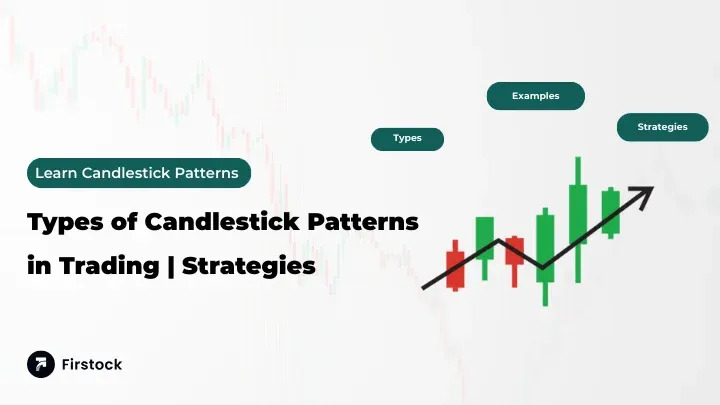
All Types of Candlestick Patterns – Firstock
Introduction
Have you ever looked at a stock chart filled with colorful red and green candles and wondered, what do these little sticks mean? You’re not alone! Candlestick patterns are like the “language” of stock charts — they tell stories about price movements, market psychology, and what might happen next.
In this guide, we’ll explore all types of candlestick patterns in simple terms. Whether you’re new to trading or curious about improving your knowledge, you’ll discover how these patterns can act as your roadmap in the world of financial markets.
Learn what is candlestick pattern and explore all types of candlestick patterns. Understand the basics and master trading with this detailed guide.
What is Candlestick Pattern?
A candlestick pattern is a visual representation of price movement within a specific time frame (like 1 minute, 1 hour, or 1 day). Each candle shows four important details:
-
Open price – where the market started
-
Close price – where it ended
-
High price – the highest point reached
-
Low price – the lowest point reached
Think of candlestick charts as a diary of traders’ emotions — fear, greed, hesitation, and excitement.
Anatomy of a Candlestick
Before diving into all types of candlestick patterns, let’s understand the structure:
-
Body: The thick portion showing the difference between open and close.
-
Wicks (or Shadows): Thin lines showing the highest and lowest prices.
-
Color: Green (or white) means price closed higher; red (or black) means it closed lower.
It’s like a weather forecast: the body tells you the main story, while the wicks reveal the extremes.
Why Candlestick Patterns Matter in Trading
Candlestick patterns help traders predict future price moves. For example:
-
Reversal signals: Indicating a possible change in trend.
-
Continuation signals: Suggesting the trend may continue.
-
Market psychology: Revealing how buyers and sellers are feeling.
If price charts were novels, candlestick patterns would be the plot twists.
Types of Candlestick Patterns: An Overview
Candlestick patterns are usually grouped into three main categories:
-
Single candlestick patterns – formed by one candle.
-
Double candlestick patterns – formed by two candles.
-
Triple candlestick patterns – formed by three candles.
Each type has its own meaning and significance in trading.
Single Candlestick Patterns
Doji Pattern
A Doji forms when the opening and closing prices are nearly the same. It looks like a cross.
-
Meaning: Market indecision.
-
Example: Imagine tossing a coin and it landing on its edge — rare, but uncertain.
Hammer & Inverted Hammer
-
Hammer: A small body with a long lower wick. Suggests potential bullish reversal.
-
Inverted Hammer: Small body with a long upper wick. Indicates possible reversal after a downtrend.
Shooting Star
Looks like an inverted hammer but appears after an uptrend. It signals a bearish reversal.
Spinning Top
Has a small body and long wicks on both sides. It shows market indecision and reduced momentum.
Double Candlestick Patterns
Bullish Engulfing
A small red candle followed by a big green candle that completely engulfs it.
-
Meaning: Buyers are taking control.
Bearish Engulfing
Opposite of bullish engulfing. Suggests sellers are stronger.
Tweezer Tops & Bottoms
Two candles with identical highs or lows.
-
Tops: Bearish reversal.
-
Bottoms: Bullish reversal.
Triple Candlestick Patterns
Morning Star
A three-candle bullish reversal pattern.
-
Red candle → Small-bodied candle (indecision) → Big green candle.
Evening Star
The bearish counterpart of Morning Star.
-
Green candle → Small candle → Big red candle.
Three White Soldiers
Three consecutive green candles with higher closes. Signals strong bullish momentum.
Three Black Crows
Three red candles in a row, showing bearish dominance.
Continuation Candlestick Patterns
Not all patterns indicate reversals. Some show that the trend is likely to continue. Examples include:
-
Rising Three Methods
-
Falling Three Methods
These patterns act like pitstops — short breaks before continuing the journey.
Reversal Candlestick Patterns
Reversal patterns suggest a turning point in price direction. They are traders’ favorite because they can signal new opportunities.
-
Bullish reversal: Hammer, Morning Star, Engulfing.
-
Bearish reversal: Shooting Star, Evening Star, Bearish Engulfing.
How to Use Candlestick Patterns in Real Trading
-
Combine candlestick patterns with indicators like RSI, MACD, or moving averages.
-
Don’t rely solely on one candle — confirm with volume and market trend.
-
Practice on demo accounts before trading with real money.
Common Mistakes to Avoid
-
Ignoring overall trend.
-
Relying only on candlestick patterns without confirmation.
-
Overtrading based on every candle.
Remember, candlestick patterns are tools — not magic spells.
Final Thoughts & Conclusion
Candlestick patterns are powerful tools that help traders decode market psychology. By understanding all types of candlestick patterns, you gain the ability to read charts like a language. But like any language, it takes practice, patience, and context to master.
Whether you’re just learning what is candlestick pattern or diving deep into advanced setups, use these insights wisely and always combine them with other trading strategies.
FAQs
1. What is candlestick pattern in trading?
A candlestick pattern is a chart formation that shows price movement and trader sentiment within a specific time frame.
2. How many types of candlestick patterns are there?
There are over 30 recognized candlestick patterns, commonly divided into single, double, and triple types.
3. Which candlestick pattern is most reliable?
Patterns like Bullish Engulfing, Morning Star, and Hammer are often considered reliable, but confirmation is essential.
4. Can beginners use candlestick patterns?
Yes, beginners can use them, but they should first practice on demo accounts and learn basic trading rules.
5. Do candlestick patterns work in all markets?
Yes, candlestick patterns are used in stocks, forex, commodities, and crypto markets since they reflect human psychology everywhere.
- Oyunlar
- Religion
- Party
- Networking
- Music
- Literature
- Art
- Health
- Gardening
- Shopping
- Food
- Fitness
- Film
- Drinks
- Dance
- Crafts
- Causes
- Wellness
- Devotional Reflections
- Bible Study & Scripture Insights
- Prayer & Worship
- Christian Living
- Spiritual Growth & Discipleship
- Testimonies & Personal Journeys
- Christian Theology & Doctrine
- Church Calendar & Liturgical Seasons
- Christian Service & Mission
- Gardening
- Health
- Home
- Literature
- Networking
- Other

 አማርኛ
አማርኛ
 Afaan Oromoo
 English
 Arabic
 French
 Spanish
 Portuguese
 Deutsch
 Dutch
Dutch
 Italiano
 Russian
 Romaian
 Portuguese (Brazil)
 Greek
Greek