


 Goto chatroom
 Termos
 Privacidade
Global Bladder Cancer Market Driven by Research Advancements
Increasing recurrence rates of bladder cancer create continuous treatment demand.
Long-term patient monitoring requires advanced diagnostic systems.
This sustained need ensures recurring market revenue streams.
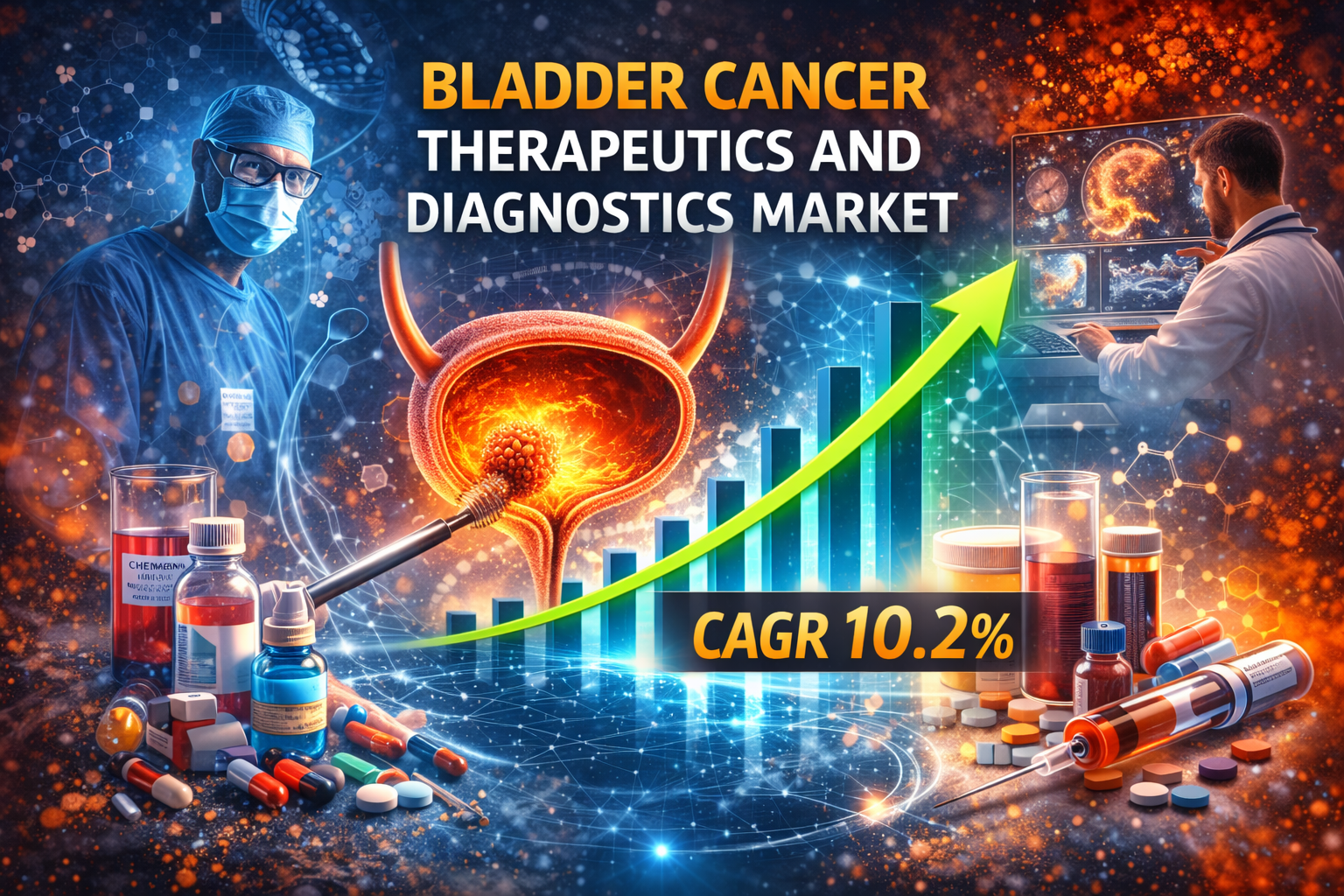
The Bladder Cancer Therapeutics and Diagnostics Market is projected to register a robust CAGR of 10.2% from 2025 to 2031, with market size expanding significantly from US$ XX million in 2024 to US$ XX Million by 2031. Rising global cancer prevalence, increasing awareness about early detection, and advancements in targeted therapies are major factors driving market expansion. As healthcare systems worldwide prioritize oncology innovation, bladder cancer treatment and diagnostic solutions are gaining substantial investment.
Market Growth Drivers
One of the primary growth drivers is the increasing incidence of bladder cancer, particularly among the aging population. Bladder cancer is more common in older adults, and with global life expectancy rising, the patient pool continues to expand. Additionally, lifestyle-related risk factors such as smoking and exposure to industrial chemicals further contribute to growing disease prevalence.
Technological advancements in diagnostic tools are also accelerating market growth. Non-invasive urine-based tests, biomarker analysis, and molecular diagnostic techniques are improving early detection rates. Early diagnosis significantly enhances survival outcomes, encouraging healthcare providers to adopt advanced diagnostic systems.
Furthermore, the rapid evolution of immunotherapy and targeted therapy is transforming the treatment landscape. Checkpoint inhibitors and personalized medicine approaches are improving patient response rates while minimizing adverse effects. These innovations are playing a crucial role in boosting therapeutics demand.
Download Sample PDF: https://www.theinsightpartners.com/sample/TIPRE00040872
Emerging Market Trends
Precision medicine is becoming a central trend in bladder cancer management. Genetic profiling and biomarker-based therapies allow clinicians to tailor treatment strategies based on individual patient characteristics. This shift toward personalized treatment improves clinical outcomes and strengthens market growth potential.
Another major trend is the integration of artificial intelligence (AI) into cancer diagnostics. AI-powered imaging and predictive analytics tools enhance tumor detection accuracy and streamline clinical workflows. As digital health adoption increases, AI-enabled solutions are expected to gain wider acceptance across oncology centers.
The expansion of clinical trials is also shaping the market landscape. Pharmaceutical and biotechnology companies are investing heavily in research and development to introduce next-generation therapies. Strategic collaborations between research institutes and industry players are accelerating drug discovery and commercialization efforts.
Opportunities Across Regions
Emerging economies present lucrative growth opportunities due to expanding healthcare infrastructure and increasing oncology awareness. Countries in Asia-Pacific, Latin America, and the Middle East are investing in advanced cancer treatment facilities, creating demand for innovative therapeutics and diagnostics solutions.
Additionally, favorable regulatory policies and fast-track drug approval pathways are supporting market growth. Governments are actively promoting cancer research initiatives, which further stimulates product development and adoption.
Competitive Landscape and Future Outlook
The competitive landscape of the Bladder Cancer Therapeutics and Diagnostics Market is characterized by strong R&D pipelines and strategic partnerships. Companies are focusing on product innovation, mergers, and acquisitions to strengthen their market position. Investments in biomarker research and combination therapies are expected to reshape treatment standards over the forecast period.
Looking ahead, the market outlook remains highly optimistic. The continued focus on early detection, personalized medicine, and digital integration will drive sustained growth through 2031. With a projected CAGR of 10.2%, the industry is poised to witness transformative advancements that improve patient outcomes and enhance healthcare efficiency.
Conclusion
The Bladder Cancer Therapeutics and Diagnostics Market is entering a dynamic growth phase fueled by innovation, rising disease prevalence, and expanding healthcare investments. As precision medicine and advanced diagnostics continue to evolve, stakeholders across the value chain—including pharmaceutical companies, diagnostic providers, investors, and healthcare institutions—stand to benefit from emerging opportunities. The next decade will be critical in shaping a more effective and technologically advanced bladder cancer treatment landscape.
- Jogos
- Religion
- Party
- Networking
- Music
- Literature
- Art
- Health
- Gardening
- Shopping
- Food
- Fitness
- Film
- Drinks
- Dance
- Crafts
- Causes
- Wellness
- Devotional Reflections
- Bible Study & Scripture Insights
- Prayer & Worship
- Christian Living
- Spiritual Growth & Discipleship
- Testimonies & Personal Journeys
- Christian Theology & Doctrine
- Church Calendar & Liturgical Seasons
- Christian Service & Mission
- Gardening
- Health
- Início
- Literature
- Networking
- Outro

 አማርኛ
አማርኛ
 Afaan Oromoo
 English
 Arabic
 French
 Spanish
 Deutsch
 Turkish
 Dutch
Dutch
 Italiano
 Russian
 Romaian
 Portuguese (Brazil)
 Greek
Greek