


 Termini e Condizioni
 Privacy
Shangfeng Panel Mounted Straight Socket Simplifies Installation Compared to Angled Socket Methods
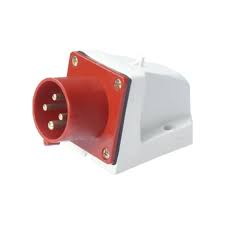
In today's connected world, selecting appropriate connectors for panel installations requires careful thought. The Panel Mounted Straight Socket represents one option that many consider when weighing it against angled socket varieties. The question of whether to go with a straight or angled design often arises in professional and hobbyist projects alike.
To address this, it helps to look at the basic construction and application of each type. The straight socket mounts flush in a way that the connection points straight out from the panel. This setup facilitates a linear cable attachment, which suits scenarios where the cable needs to run directly away from the surface without immediate turns. On the other side, angled sockets incorporate a bend in the housing or pin arrangement, directing the cable to the side or downward right from the connection point. This design can prove useful when the area in front of the panel has limited room or when routing cables along the panel edge makes sense.
Installation aspects differ between the two. Mounting a straight socket typically involves a standard hole in the panel and securing it with nuts or clips in a perpendicular manner. The process remains straightforward for those familiar with panel work. For angled sockets, the mounting follows a similar panel cutout, but the angled orientation means planners must account for the direction the cable will exit to avoid interference with nearby components. Both approaches allow secure attachment, yet the choice influences how the final assembly looks and functions in the enclosure.
Space management is another point for evaluation. Straight sockets extend outward, requiring clearance in the perpendicular direction. In applications like control cabinets with ample front space, this poses little issue. Angled sockets, by contrast, keep the cable closer to the panel plane, which can help in compact designs or where multiple connectors sit close together. This feature aids in organizing wires neatly without excessive looping or additional supports.
Cable strain and longevity also come into play. A straight connection maintains a natural path for the cable, potentially reducing wear at the entry point if the cable is pulled straight. Angled connections introduce a built-in turn, which the design usually accommodates with smooth transitions to prevent pinching. Users in fields involving vibration or movement may note differences in how each handles daily operation over time.
Compatibility with existing systems forms part of the decision. Many panels come with pre-designed cutouts that fit standard straight sockets readily. Switching to angled may require verifying dimensions to ensure proper fit and alignment. Electrical ratings, such as current capacity and insulation, stay comparable across types, allowing focus on the mechanical aspects for selection.
Practical examples illustrate the considerations. In audio equipment panels, straight sockets might align well with rack setups where cables run to rear amplifiers. In automotive diagnostic panels or machinery interfaces, angled sockets could facilitate easier access in cramped engine bays or operator stations. Each situation calls for matching the connector to the layout priorities.
Maintenance and accessibility matter too. With straight sockets, the connection area stays exposed for quick checks or replacements. Angled versions might tuck the cable somewhat, but they still provide access through the angled port. Regular inspection ensures both types continue to deliver consistent performance in their respective roles.
Users often seek guidance through product catalogs or support resources to match specifications to their needs. Factors like material quality, sealing for dust or moisture, and color coding for identification apply to both categories. The goal remains finding a match that integrates smoothly into the overall system.
As projects vary widely, from simple home automation to complex industrial controls, the comparison between straight and angled sockets highlights the importance of context. A thorough review of requirements leads to a fitting selection that supports reliable operation.For additional details on available connectors, including the Panel Mounted Straight Socket and related items, along with guidance on selection, https://www.socketsfe.com/ provides a comprehensive resource.
- Giochi
- Religion
- Party
- Networking
- Music
- Literature
- Art
- Health
- Gardening
- Shopping
- Food
- Fitness
- Film
- Drinks
- Dance
- Crafts
- Causes
- Wellness
- Devotional Reflections
- Bible Study & Scripture Insights
- Prayer & Worship
- Christian Living
- Spiritual Growth & Discipleship
- Testimonies & Personal Journeys
- Christian Theology & Doctrine
- Church Calendar & Liturgical Seasons
- Christian Service & Mission
- Gardening
- Health
- Home
- Literature
- Networking
- Altre informazioni

 አማርኛ
አማርኛ
 Afaan Oromoo
 English
 Arabic
 French
 Spanish
 Portuguese
 Deutsch
 Turkish
 Dutch
Dutch
 Russian
 Romaian
 Portuguese (Brazil)
 Greek
Greek