The Next-Generation Memory Market Trends 2026 are shaping a transformative era in the global semiconductor landscape, driven by the explosive growth of data-centric technologies and the rising need for high-speed storage solutions. As industries increasingly rely on artificial intelligence, cloud computing, and edge devices, the demand for advanced memory IC solutions continues to surge. These emerging trends highlight how innovation in non-volatile memory and high-density memory architectures is redefining performance, efficiency, and scalability across applications.
Evolving Landscape of Next-Generation Memory
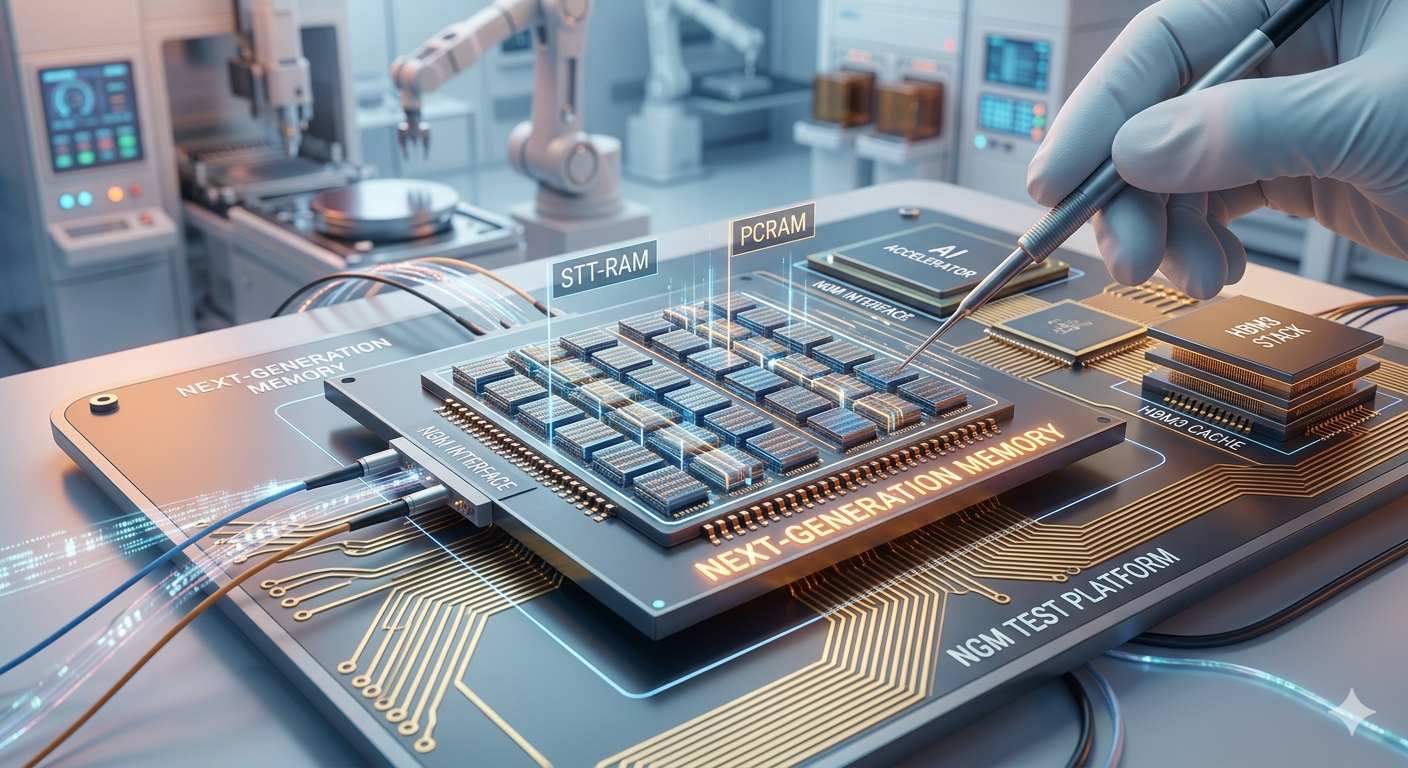
The memory industry is undergoing a major shift from traditional DRAM/SSD technology toward more efficient and scalable alternatives. Innovations such as resistive RAM (ReRAM), magnetoresistive RAM (MRAM), and phase-change memory (PCM) are gaining traction due to their ability to offer faster data access, lower power consumption, and enhanced durability. These technologies are becoming essential in supporting real-time processing and high-performance computing workloads.
Moreover, the growing importance of non-volatile memory is enabling persistent data storage even during power interruptions, making it a critical component in modern computing infrastructures. This shift is particularly valuable for enterprise data centers and mission-critical applications.
Key Trends Driving the Market in 2026
1. Rising Demand for AI and Machine Learning Integration
Artificial intelligence and machine learning workloads require massive volumes of data to be processed at unprecedented speeds. Next-generation memory solutions are being designed to handle such requirements efficiently, ensuring faster computation and reduced latency.
2. Growth of Edge Computing
With the proliferation of IoT devices, edge computing is becoming more prominent. High-density memory and high-speed storage technologies are crucial for enabling real-time data processing at the edge, reducing dependence on centralized cloud systems.
3. Advancements in Data Center Infrastructure
Modern data centers are increasingly adopting advanced memory IC solutions to optimize performance and energy efficiency. These improvements are essential for handling the ever-growing data traffic generated by digital services.
4. Increased Adoption of Hybrid Memory Systems
Hybrid memory architectures that combine multiple memory technologies are emerging as a key trend. These systems leverage the strengths of different memory types, offering a balance between speed, capacity, and cost.
5. Focus on Energy Efficiency
Energy-efficient memory solutions are becoming a priority as organizations aim to reduce operational costs and environmental impact. Next-generation memory technologies are being engineered to deliver superior performance while consuming less power.
Market Opportunities and Challenges
The market presents significant growth opportunities due to the increasing adoption of advanced technologies across industries such as automotive, healthcare, consumer electronics, and telecommunications. Autonomous vehicles, for instance, require robust and high-speed storage systems to process sensor data in real time.
However, challenges such as high development costs, complex manufacturing processes, and compatibility issues with existing systems may hinder widespread adoption. Despite these challenges, ongoing research and innovation are expected to overcome these barriers in the coming years.
Integration with Emerging Display and Connectivity Markets
The evolution of memory technologies is closely linked with advancements in related sectors. For instance, the Field Emission Display Market is benefiting from improved memory solutions that enhance display performance and efficiency. Similarly, the Uk Wireless Connectivity Market is witnessing increased demand for advanced memory systems to support seamless data transmission and connectivity.
These interconnected developments highlight the broader ecosystem in which next-generation memory operates, emphasizing its role as a foundational technology across industries.
Future Outlook
Looking ahead to 2026 and beyond, the next-generation memory market is expected to witness rapid advancements fueled by continuous innovation and increasing investments. The integration of cutting-edge memory solutions into emerging technologies will play a crucial role in shaping the digital future.
As organizations prioritize performance, scalability, and efficiency, the demand for non-volatile memory, high-density memory, and advanced memory IC solutions will continue to grow. This dynamic evolution positions the market as a key enabler of next-generation computing and digital transformation.
FAQs
1. What is driving the growth of next-generation memory technologies?
The growth is primarily driven by the increasing demand for high-speed storage, AI applications, cloud computing, and the need for efficient data processing solutions.
2. How is non-volatile memory different from traditional memory?
Non-volatile memory retains data even when power is turned off, unlike traditional volatile memory such as DRAM, making it more reliable for critical applications.
3. Which industries benefit the most from next-generation memory?
Industries such as IT, telecommunications, automotive, healthcare, and consumer electronics benefit significantly due to their reliance on fast and efficient data processing.
Discover Localized Data And Forecasts Across Key Global Regions And Individual Country Markets:
Us Next-Generation Memory Market
3D Display Market
Flexible Display Technology Market
4K Technology Market
4K Camera Market
Interactive Video Wall Market
Screenless Display Market
Optical Lenses Market
Micro-Led Display Market
Chip On Board Led Market



 Términos
 Privacidad

 አማርኛ
አማርኛ
 Afaan Oromoo
 English
 Arabic
 French
 Portuguese
 Deutsch
 Turkish
 Dutch
Dutch
 Italiano
 Russian
 Romaian
 Portuguese (Brazil)
 Greek
Greek