


 Goto chatroom
 Términos
 Privacidad
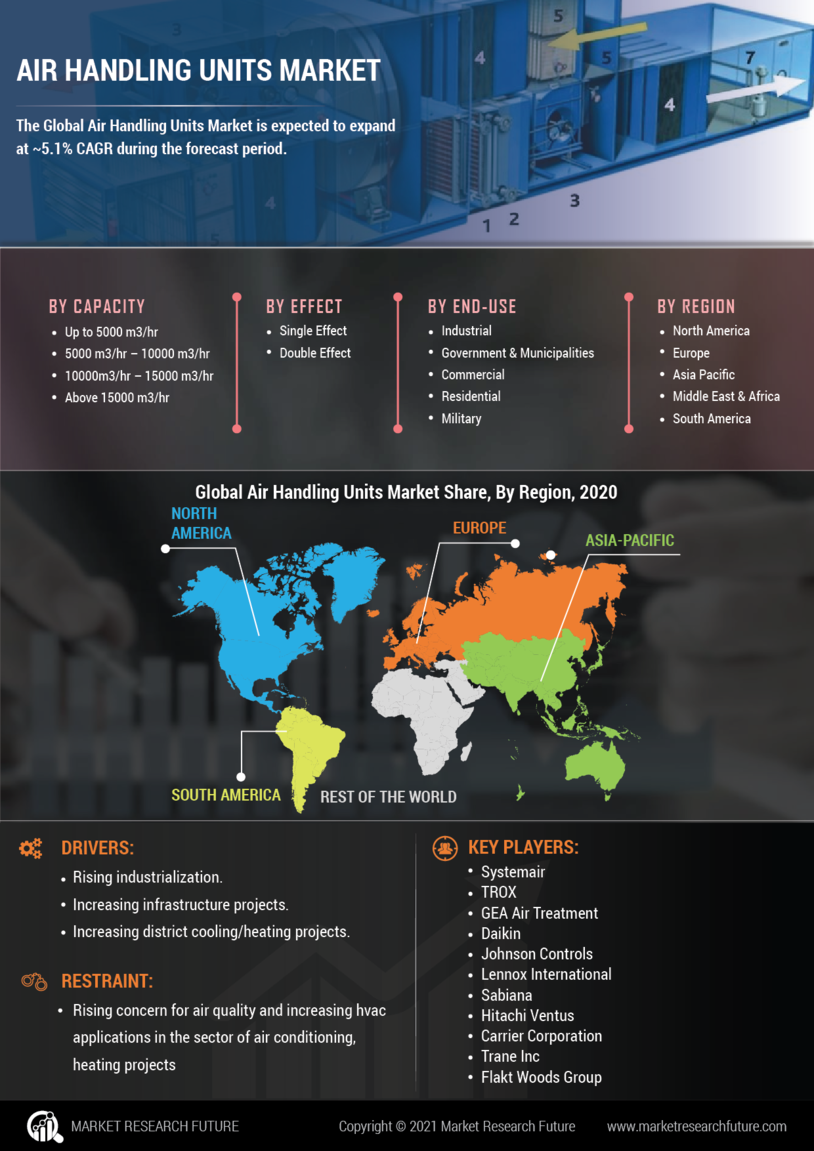
Evolving Dynamics and Emerging Trends in the Global Air Handling Units Market
https://www.marketresearchfuture.com/reports/air-handling-units-market-962
The Air Handling Units Market Trends
are shaping the future of HVAC systems worldwide, driven by technological innovation, sustainability goals, and increasing demand for indoor air quality solutions. As industries, commercial spaces, and residential buildings prioritize energy-efficient climate control systems, air handling units (AHUs) have emerged as essential components in modern infrastructure. These systems play a crucial role in regulating temperature, humidity, and air circulation, making them indispensable for both comfort and health.
Rising Focus on Energy Efficiency and Sustainability
One of the most significant trends influencing the air handling units market is the growing emphasis on energy-efficient HVAC systems. With governments and organizations implementing strict energy regulations, manufacturers are innovating AHU designs that minimize power consumption while maximizing output. Advanced technologies such as variable frequency drives (VFDs), heat recovery systems, and smart sensors are now integral to AHU design, enabling automated control and optimized performance.
Sustainability is also becoming a key differentiator in the industry. Manufacturers are integrating eco-friendly materials, recyclable components, and natural refrigerants to reduce carbon footprints. Moreover, the trend of green building certifications, such as LEED and BREEAM, is pushing developers to adopt energy-efficient AHUs that comply with environmental standards.
Integration of Smart and IoT-Based Technologies
The advent of the Internet of Things (IoT) is revolutionizing the functionality of air handling units. Smart AHUs equipped with IoT-enabled sensors and cloud connectivity allow real-time monitoring of performance metrics, predictive maintenance, and remote control capabilities. This technology integration enhances operational efficiency, reduces downtime, and lowers maintenance costs.
In commercial and industrial environments, predictive analytics and AI-driven algorithms are increasingly used to anticipate system failures and optimize air distribution based on occupancy levels and air quality data. This digital transformation is paving the way for intelligent building management systems (BMS) that seamlessly integrate with AHUs for automated climate control.
https://www.marketresearchfuture.com/reports/air-handling-units-market-962
The Air Handling Units Market Trends
are shaping the future of HVAC systems worldwide, driven by technological innovation, sustainability goals, and increasing demand for indoor air quality solutions. As industries, commercial spaces, and residential buildings prioritize energy-efficient climate control systems, air handling units (AHUs) have emerged as essential components in modern infrastructure. These systems play a crucial role in regulating temperature, humidity, and air circulation, making them indispensable for both comfort and health.
Rising Focus on Energy Efficiency and Sustainability
One of the most significant trends influencing the air handling units market is the growing emphasis on energy-efficient HVAC systems. With governments and organizations implementing strict energy regulations, manufacturers are innovating AHU designs that minimize power consumption while maximizing output. Advanced technologies such as variable frequency drives (VFDs), heat recovery systems, and smart sensors are now integral to AHU design, enabling automated control and optimized performance.
Sustainability is also becoming a key differentiator in the industry. Manufacturers are integrating eco-friendly materials, recyclable components, and natural refrigerants to reduce carbon footprints. Moreover, the trend of green building certifications, such as LEED and BREEAM, is pushing developers to adopt energy-efficient AHUs that comply with environmental standards.
Integration of Smart and IoT-Based Technologies
The advent of the Internet of Things (IoT) is revolutionizing the functionality of air handling units. Smart AHUs equipped with IoT-enabled sensors and cloud connectivity allow real-time monitoring of performance metrics, predictive maintenance, and remote control capabilities. This technology integration enhances operational efficiency, reduces downtime, and lowers maintenance costs.
In commercial and industrial environments, predictive analytics and AI-driven algorithms are increasingly used to anticipate system failures and optimize air distribution based on occupancy levels and air quality data. This digital transformation is paving the way for intelligent building management systems (BMS) that seamlessly integrate with AHUs for automated climate control.
Evolving Dynamics and Emerging Trends in the Global Air Handling Units Market
https://www.marketresearchfuture.com/reports/air-handling-units-market-962
The Air Handling Units Market Trends
are shaping the future of HVAC systems worldwide, driven by technological innovation, sustainability goals, and increasing demand for indoor air quality solutions. As industries, commercial spaces, and residential buildings prioritize energy-efficient climate control systems, air handling units (AHUs) have emerged as essential components in modern infrastructure. These systems play a crucial role in regulating temperature, humidity, and air circulation, making them indispensable for both comfort and health.
Rising Focus on Energy Efficiency and Sustainability
One of the most significant trends influencing the air handling units market is the growing emphasis on energy-efficient HVAC systems. With governments and organizations implementing strict energy regulations, manufacturers are innovating AHU designs that minimize power consumption while maximizing output. Advanced technologies such as variable frequency drives (VFDs), heat recovery systems, and smart sensors are now integral to AHU design, enabling automated control and optimized performance.
Sustainability is also becoming a key differentiator in the industry. Manufacturers are integrating eco-friendly materials, recyclable components, and natural refrigerants to reduce carbon footprints. Moreover, the trend of green building certifications, such as LEED and BREEAM, is pushing developers to adopt energy-efficient AHUs that comply with environmental standards.
Integration of Smart and IoT-Based Technologies
The advent of the Internet of Things (IoT) is revolutionizing the functionality of air handling units. Smart AHUs equipped with IoT-enabled sensors and cloud connectivity allow real-time monitoring of performance metrics, predictive maintenance, and remote control capabilities. This technology integration enhances operational efficiency, reduces downtime, and lowers maintenance costs.
In commercial and industrial environments, predictive analytics and AI-driven algorithms are increasingly used to anticipate system failures and optimize air distribution based on occupancy levels and air quality data. This digital transformation is paving the way for intelligent building management systems (BMS) that seamlessly integrate with AHUs for automated climate control.
0 Commentarios
0 Acciones
585 Views
0 Vista previa

 አማርኛ
አማርኛ
 Afaan Oromoo
 English
 Arabic
 French
 Portuguese
 Deutsch
 Turkish
 Dutch
Dutch
 Italiano
 Russian
 Romaian
 Portuguese (Brazil)
 Greek
Greek