


 Goto chatroom
 Voorwaarden
 Privacy
Rising Demand and Technological Advancements Driving Gas Genset Market Growth
https://www.marketresearchfuture.com/reports/gas-genset-market-7297
The global Gas Genset Market Growth
is witnessing remarkable momentum due to the rising need for reliable and sustainable power generation solutions. Gas gensets, which operate using natural gas, biogas, or other gaseous fuels, have become a preferred alternative to diesel generators because of their lower emissions, cost-effectiveness, and operational efficiency. The increasing frequency of power outages, rapid urbanization, and industrial expansion across emerging economies are major factors propelling market growth. Moreover, governments’ focus on reducing carbon footprints and promoting clean energy sources is further stimulating demand for gas-based power generation systems.
Growing Energy Demand and Infrastructure Development
One of the primary drivers of gas genset market growth is the surging global energy demand. Industries, data centers, hospitals, and commercial complexes rely heavily on continuous and stable electricity supply. As the global economy becomes increasingly digital, the need for uninterrupted power has surged. Gas gensets are emerging as an ideal solution, providing backup and prime power with lower emissions and higher efficiency compared to traditional diesel generators. Additionally, the expansion of residential and industrial infrastructure in developing countries such as India, China, and Indonesia is fueling significant demand for distributed power generation systems.
Natural gas availability and advancements in gas infrastructure have also contributed to the market’s expansion. Many countries are investing in gas pipeline networks and LNG import terminals, ensuring easy fuel accessibility for gas genset operations. The integration of gas gensets into hybrid energy systems—combining renewable sources like solar or wind—has further enhanced their market appeal. These hybrid systems offer both sustainability and reliability, ensuring consistent energy supply even when renewable generation fluctuates.
Technological Innovations Enhancing Market Competitiveness
Technological advancements have revolutionized the performance and efficiency of gas gensets. Manufacturers are focusing on smart control systems, real-time monitoring, and automation to optimize performance and minimize downtime. The integration of IoT-based solutions allows operators to track fuel consumption, emissions, and maintenance schedules, improving overall lifecycle management.
Additionally, the shift toward lean-burn technology in gas gensets has led to higher thermal efficiency and reduced nitrogen oxide (NOx) emissions. This innovation aligns with global environmental regulations and makes gas gensets a more eco-friendly choice for industries seeking sustainable energy solutions. Compact and modular designs have also gained traction, making installation and mobility easier for both small-scale and large-scale operations.
Market Segmentation and Regional Insights
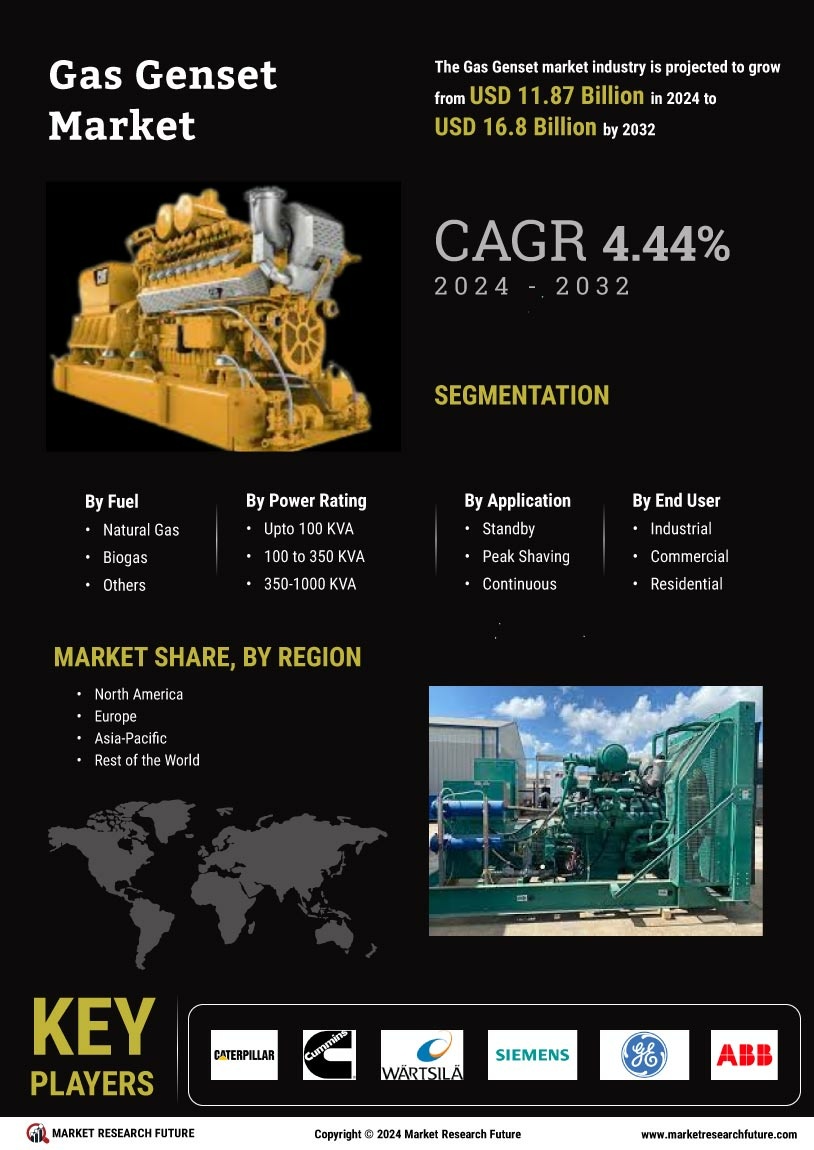
The gas genset market can be segmented by fuel type, power rating, application, and end-use. Natural gas gensets dominate the market due to the growing availability of natural gas and its cost advantage. In terms of power rating, the market is categorized into low, medium, and high-capacity gensets, catering to diverse applications such as commercial buildings, industrial facilities, and residential complexes.
Regionally, the Asia-Pacific region holds a substantial share of the market, driven by rapid industrialization, urbanization, and government initiatives to promote clean energy. Countries like China and India are leading adopters due to their growing manufacturing sectors and infrastructural projects. North America is another key market, benefiting from abundant natural gas reserves and increasing adoption in data centers and healthcare facilities. Meanwhile, Europe’s focus on reducing carbon emissions has spurred the replacement of diesel gensets with cleaner gas-based alternatives.
Future Outlook and Opportunities
The future of the gas genset market looks promising, with ongoing developments in fuel cell technology and renewable integration. As industries aim to transition toward sustainable power solutions, gas gensets will continue playing a vital role in bridging the gap between conventional and renewable energy. Furthermore, increasing investments in microgrids and distributed energy resources are expected to expand the market’s application scope.
https://www.marketresearchfuture.com/reports/gas-genset-market-7297
The global Gas Genset Market Growth
is witnessing remarkable momentum due to the rising need for reliable and sustainable power generation solutions. Gas gensets, which operate using natural gas, biogas, or other gaseous fuels, have become a preferred alternative to diesel generators because of their lower emissions, cost-effectiveness, and operational efficiency. The increasing frequency of power outages, rapid urbanization, and industrial expansion across emerging economies are major factors propelling market growth. Moreover, governments’ focus on reducing carbon footprints and promoting clean energy sources is further stimulating demand for gas-based power generation systems.
Growing Energy Demand and Infrastructure Development
One of the primary drivers of gas genset market growth is the surging global energy demand. Industries, data centers, hospitals, and commercial complexes rely heavily on continuous and stable electricity supply. As the global economy becomes increasingly digital, the need for uninterrupted power has surged. Gas gensets are emerging as an ideal solution, providing backup and prime power with lower emissions and higher efficiency compared to traditional diesel generators. Additionally, the expansion of residential and industrial infrastructure in developing countries such as India, China, and Indonesia is fueling significant demand for distributed power generation systems.
Natural gas availability and advancements in gas infrastructure have also contributed to the market’s expansion. Many countries are investing in gas pipeline networks and LNG import terminals, ensuring easy fuel accessibility for gas genset operations. The integration of gas gensets into hybrid energy systems—combining renewable sources like solar or wind—has further enhanced their market appeal. These hybrid systems offer both sustainability and reliability, ensuring consistent energy supply even when renewable generation fluctuates.
Technological Innovations Enhancing Market Competitiveness
Technological advancements have revolutionized the performance and efficiency of gas gensets. Manufacturers are focusing on smart control systems, real-time monitoring, and automation to optimize performance and minimize downtime. The integration of IoT-based solutions allows operators to track fuel consumption, emissions, and maintenance schedules, improving overall lifecycle management.
Additionally, the shift toward lean-burn technology in gas gensets has led to higher thermal efficiency and reduced nitrogen oxide (NOx) emissions. This innovation aligns with global environmental regulations and makes gas gensets a more eco-friendly choice for industries seeking sustainable energy solutions. Compact and modular designs have also gained traction, making installation and mobility easier for both small-scale and large-scale operations.
Market Segmentation and Regional Insights
The gas genset market can be segmented by fuel type, power rating, application, and end-use. Natural gas gensets dominate the market due to the growing availability of natural gas and its cost advantage. In terms of power rating, the market is categorized into low, medium, and high-capacity gensets, catering to diverse applications such as commercial buildings, industrial facilities, and residential complexes.
Regionally, the Asia-Pacific region holds a substantial share of the market, driven by rapid industrialization, urbanization, and government initiatives to promote clean energy. Countries like China and India are leading adopters due to their growing manufacturing sectors and infrastructural projects. North America is another key market, benefiting from abundant natural gas reserves and increasing adoption in data centers and healthcare facilities. Meanwhile, Europe’s focus on reducing carbon emissions has spurred the replacement of diesel gensets with cleaner gas-based alternatives.
Future Outlook and Opportunities
The future of the gas genset market looks promising, with ongoing developments in fuel cell technology and renewable integration. As industries aim to transition toward sustainable power solutions, gas gensets will continue playing a vital role in bridging the gap between conventional and renewable energy. Furthermore, increasing investments in microgrids and distributed energy resources are expected to expand the market’s application scope.
Rising Demand and Technological Advancements Driving Gas Genset Market Growth
https://www.marketresearchfuture.com/reports/gas-genset-market-7297
The global Gas Genset Market Growth
is witnessing remarkable momentum due to the rising need for reliable and sustainable power generation solutions. Gas gensets, which operate using natural gas, biogas, or other gaseous fuels, have become a preferred alternative to diesel generators because of their lower emissions, cost-effectiveness, and operational efficiency. The increasing frequency of power outages, rapid urbanization, and industrial expansion across emerging economies are major factors propelling market growth. Moreover, governments’ focus on reducing carbon footprints and promoting clean energy sources is further stimulating demand for gas-based power generation systems.
Growing Energy Demand and Infrastructure Development
One of the primary drivers of gas genset market growth is the surging global energy demand. Industries, data centers, hospitals, and commercial complexes rely heavily on continuous and stable electricity supply. As the global economy becomes increasingly digital, the need for uninterrupted power has surged. Gas gensets are emerging as an ideal solution, providing backup and prime power with lower emissions and higher efficiency compared to traditional diesel generators. Additionally, the expansion of residential and industrial infrastructure in developing countries such as India, China, and Indonesia is fueling significant demand for distributed power generation systems.
Natural gas availability and advancements in gas infrastructure have also contributed to the market’s expansion. Many countries are investing in gas pipeline networks and LNG import terminals, ensuring easy fuel accessibility for gas genset operations. The integration of gas gensets into hybrid energy systems—combining renewable sources like solar or wind—has further enhanced their market appeal. These hybrid systems offer both sustainability and reliability, ensuring consistent energy supply even when renewable generation fluctuates.
Technological Innovations Enhancing Market Competitiveness
Technological advancements have revolutionized the performance and efficiency of gas gensets. Manufacturers are focusing on smart control systems, real-time monitoring, and automation to optimize performance and minimize downtime. The integration of IoT-based solutions allows operators to track fuel consumption, emissions, and maintenance schedules, improving overall lifecycle management.
Additionally, the shift toward lean-burn technology in gas gensets has led to higher thermal efficiency and reduced nitrogen oxide (NOx) emissions. This innovation aligns with global environmental regulations and makes gas gensets a more eco-friendly choice for industries seeking sustainable energy solutions. Compact and modular designs have also gained traction, making installation and mobility easier for both small-scale and large-scale operations.
Market Segmentation and Regional Insights
The gas genset market can be segmented by fuel type, power rating, application, and end-use. Natural gas gensets dominate the market due to the growing availability of natural gas and its cost advantage. In terms of power rating, the market is categorized into low, medium, and high-capacity gensets, catering to diverse applications such as commercial buildings, industrial facilities, and residential complexes.
Regionally, the Asia-Pacific region holds a substantial share of the market, driven by rapid industrialization, urbanization, and government initiatives to promote clean energy. Countries like China and India are leading adopters due to their growing manufacturing sectors and infrastructural projects. North America is another key market, benefiting from abundant natural gas reserves and increasing adoption in data centers and healthcare facilities. Meanwhile, Europe’s focus on reducing carbon emissions has spurred the replacement of diesel gensets with cleaner gas-based alternatives.
Future Outlook and Opportunities
The future of the gas genset market looks promising, with ongoing developments in fuel cell technology and renewable integration. As industries aim to transition toward sustainable power solutions, gas gensets will continue playing a vital role in bridging the gap between conventional and renewable energy. Furthermore, increasing investments in microgrids and distributed energy resources are expected to expand the market’s application scope.
0 Reacties
0 aandelen
673 Views
0 voorbeeld

 አማርኛ
አማርኛ
 Afaan Oromoo
 English
 Arabic
 French
 Spanish
 Portuguese
 Deutsch
 Turkish
 Italiano
 Russian
 Romaian
 Portuguese (Brazil)
 Greek
Greek