


 Goto chatroom
 Terms
Terms
 Privacy
Hydrocephalus Shunts Market Witnesses Steady Expansion Amid Technological Advancements
United States of America–19 Dec 2025- The hydrocephalus shunts market continues to evolve as a critical segment within neurosurgical devices, driven by rising awareness of hydrocephalus and innovations in shunt technology. Healthcare providers increasingly rely on these devices to manage cerebrospinal fluid buildup effectively, positioning the market for sustained relevance in patient care protocols.
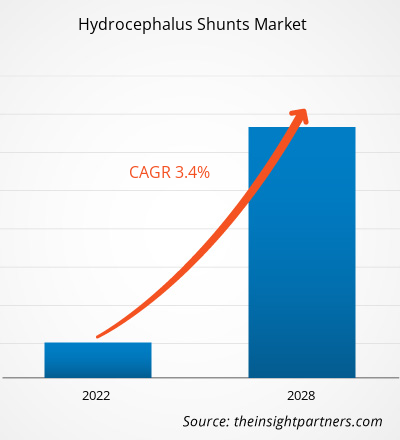
The hydrocephalus shunts market is expected to grow US$ 360.01 million by 2028; it is estimated to grow at a CAGR of 3.4% from 2022 to 2028.
For more information- https://www.theinsightpartners.com/reports/hydrocephalus-shunts-market
Market Drivers and Trends
Rising diagnosis rates, particularly among pediatric and elderly populations, fuel demand for hydrocephalus shunts as essential treatment solutions. Advancements like programmable valves and anti-siphon mechanisms enhance safety and efficacy, allowing customized fluid regulation and reducing complications. Emerging markets benefit from expanding healthcare infrastructure and neurosurgical access, while mature regions emphasize replacement surgeries and minimally invasive techniques.
Key Product Innovations
Programmable shunt systems lead innovations by offering adjustable pressure settings tailored to patient needs, improving long-term outcomes over traditional fixed-pressure models. Antimicrobial catheter designs and durable materials address infection risks and mechanical failures, key concerns in shunt therapy. Manufacturers prioritize reliability through collaborations with hospitals, ensuring regulatory compliance and physician trust.
Download PDF Copy - https://www.theinsightpartners.com/sample/TIPRE00028558
Regional Market Dynamics
North America maintains dominance due to advanced infrastructure, high healthcare spending, and key player concentrations, supporting rapid adoption of innovative shunts. Europe follows with strong governmental healthcare support and focus on neurological R&D. Asia-Pacific emerges as the fastest-growing region, propelled by investments in medical facilities, rising awareness in countries like China and India, and a growing middle class seeking advanced treatments.
Segmentation Insights
The market segments by product into ventriculoperitoneal, ventriculoatrial, and lumbar-peritoneal shunts, with ventriculoperitoneal variants preferred for their reliability in diverting fluid to the abdomen. Valves—differential pressure, programmable, and flow-regulated—cater to varying patient profiles, while end-user demand spans hospitals, ambulatory centers, and specialty clinics. Pediatric applications drive volume, complemented by adult cases linked to trauma or tumors.
United States of America–19 Dec 2025- The hydrocephalus shunts market continues to evolve as a critical segment within neurosurgical devices, driven by rising awareness of hydrocephalus and innovations in shunt technology. Healthcare providers increasingly rely on these devices to manage cerebrospinal fluid buildup effectively, positioning the market for sustained relevance in patient care protocols.
The hydrocephalus shunts market is expected to grow US$ 360.01 million by 2028; it is estimated to grow at a CAGR of 3.4% from 2022 to 2028.
For more information- https://www.theinsightpartners.com/reports/hydrocephalus-shunts-market
Market Drivers and Trends
Rising diagnosis rates, particularly among pediatric and elderly populations, fuel demand for hydrocephalus shunts as essential treatment solutions. Advancements like programmable valves and anti-siphon mechanisms enhance safety and efficacy, allowing customized fluid regulation and reducing complications. Emerging markets benefit from expanding healthcare infrastructure and neurosurgical access, while mature regions emphasize replacement surgeries and minimally invasive techniques.
Key Product Innovations
Programmable shunt systems lead innovations by offering adjustable pressure settings tailored to patient needs, improving long-term outcomes over traditional fixed-pressure models. Antimicrobial catheter designs and durable materials address infection risks and mechanical failures, key concerns in shunt therapy. Manufacturers prioritize reliability through collaborations with hospitals, ensuring regulatory compliance and physician trust.
Download PDF Copy - https://www.theinsightpartners.com/sample/TIPRE00028558
Regional Market Dynamics
North America maintains dominance due to advanced infrastructure, high healthcare spending, and key player concentrations, supporting rapid adoption of innovative shunts. Europe follows with strong governmental healthcare support and focus on neurological R&D. Asia-Pacific emerges as the fastest-growing region, propelled by investments in medical facilities, rising awareness in countries like China and India, and a growing middle class seeking advanced treatments.
Segmentation Insights
The market segments by product into ventriculoperitoneal, ventriculoatrial, and lumbar-peritoneal shunts, with ventriculoperitoneal variants preferred for their reliability in diverting fluid to the abdomen. Valves—differential pressure, programmable, and flow-regulated—cater to varying patient profiles, while end-user demand spans hospitals, ambulatory centers, and specialty clinics. Pediatric applications drive volume, complemented by adult cases linked to trauma or tumors.
Hydrocephalus Shunts Market Witnesses Steady Expansion Amid Technological Advancements
United States of America–19 Dec 2025- The hydrocephalus shunts market continues to evolve as a critical segment within neurosurgical devices, driven by rising awareness of hydrocephalus and innovations in shunt technology. Healthcare providers increasingly rely on these devices to manage cerebrospinal fluid buildup effectively, positioning the market for sustained relevance in patient care protocols.
The hydrocephalus shunts market is expected to grow US$ 360.01 million by 2028; it is estimated to grow at a CAGR of 3.4% from 2022 to 2028.
For more information- https://www.theinsightpartners.com/reports/hydrocephalus-shunts-market
Market Drivers and Trends
Rising diagnosis rates, particularly among pediatric and elderly populations, fuel demand for hydrocephalus shunts as essential treatment solutions. Advancements like programmable valves and anti-siphon mechanisms enhance safety and efficacy, allowing customized fluid regulation and reducing complications. Emerging markets benefit from expanding healthcare infrastructure and neurosurgical access, while mature regions emphasize replacement surgeries and minimally invasive techniques.
Key Product Innovations
Programmable shunt systems lead innovations by offering adjustable pressure settings tailored to patient needs, improving long-term outcomes over traditional fixed-pressure models. Antimicrobial catheter designs and durable materials address infection risks and mechanical failures, key concerns in shunt therapy. Manufacturers prioritize reliability through collaborations with hospitals, ensuring regulatory compliance and physician trust.
Download PDF Copy - https://www.theinsightpartners.com/sample/TIPRE00028558
Regional Market Dynamics
North America maintains dominance due to advanced infrastructure, high healthcare spending, and key player concentrations, supporting rapid adoption of innovative shunts. Europe follows with strong governmental healthcare support and focus on neurological R&D. Asia-Pacific emerges as the fastest-growing region, propelled by investments in medical facilities, rising awareness in countries like China and India, and a growing middle class seeking advanced treatments.
Segmentation Insights
The market segments by product into ventriculoperitoneal, ventriculoatrial, and lumbar-peritoneal shunts, with ventriculoperitoneal variants preferred for their reliability in diverting fluid to the abdomen. Valves—differential pressure, programmable, and flow-regulated—cater to varying patient profiles, while end-user demand spans hospitals, ambulatory centers, and specialty clinics. Pediatric applications drive volume, complemented by adult cases linked to trauma or tumors.
0 Comments
0 Shares
531 Views
0 Reviews

 አማርኛ
አማርኛ
 Afaan Oromoo
 Arabic
 French
 Spanish
 Portuguese
 Deutsch
 Turkish
 Dutch
Dutch
 Italiano
 Russian
 Romaian
 Portuguese (Brazil)
 Greek
Greek